
Project logistics solutions
End-to-end heavy lift, oversize, and specialized cargo solutions — planned, managed, and delivered with precision.
Project logistics made simple – fast, secure, and tailored to your needs






Heavy cargo, handled with precision
We manage complex, large-scale, and specialized shipments from planning to final delivery. With dedicated project teams, certified equipment, and engineered transport solutions, every move is executed safely, efficiently, and on schedule.
Explore the project logistics services we offer
What makes us the industry standard
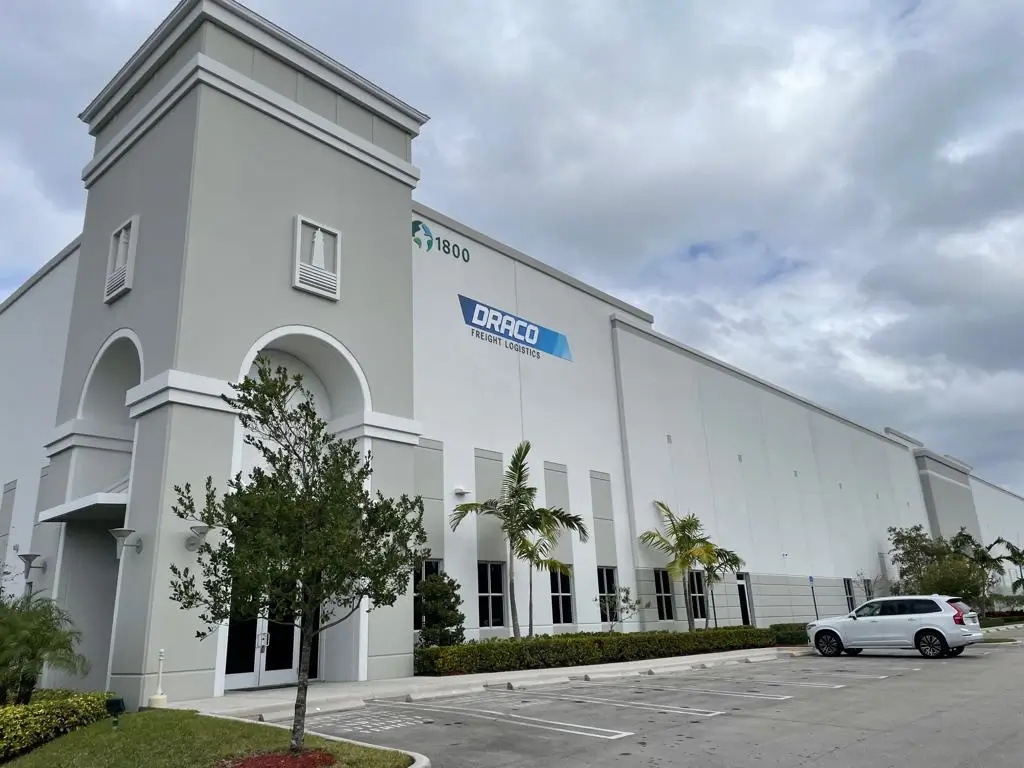
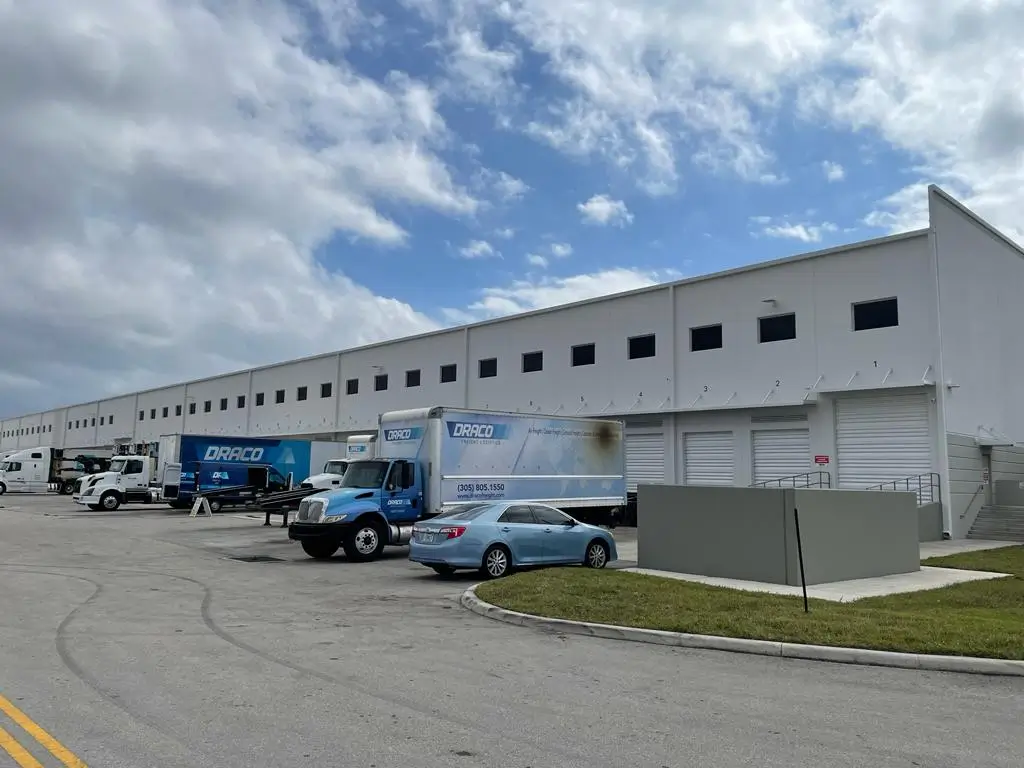
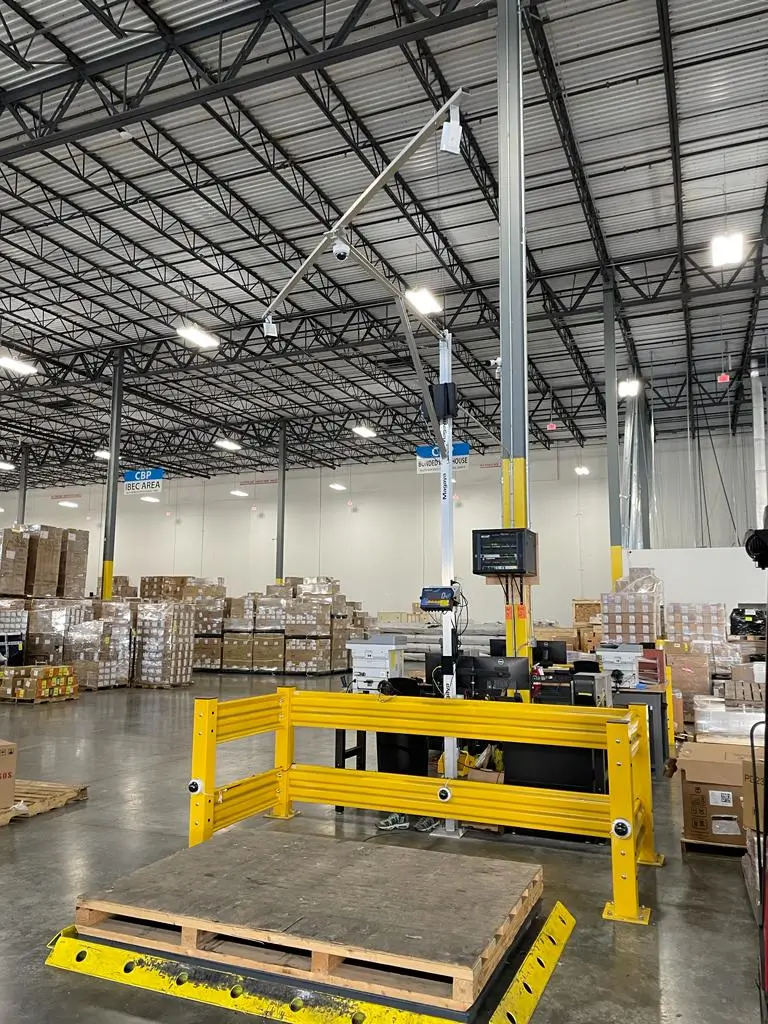
The trusted infrastructure behind your freight

Connected through
trusted networks



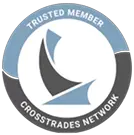






Extra support for every shipment
From palletizing to repacking, we provide services that protect your cargo and keep it moving.
Draco Products
Customs & Insurance
Customs expertise and cargo insurance to keep freight moving safely
Draco simplifies customs clearance and protects your cargo with tailored insurance solutions.
We ensure compliance with international regulations, reduce the risk of delays, and safeguard shipments against unforeseen events.
Packaging & Cargo Care
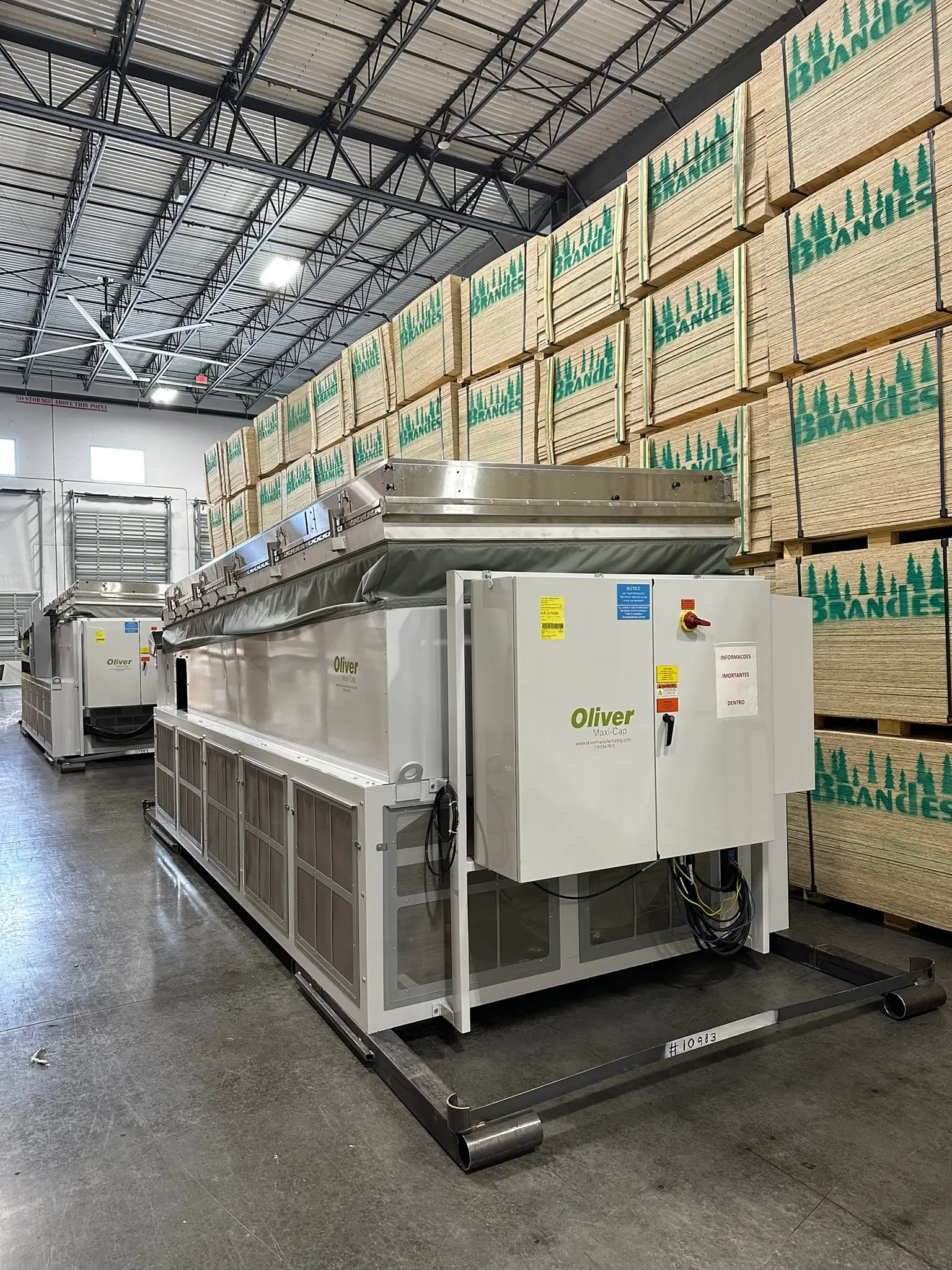
Packaging, repacking, palletizing, fumigation, and much more to protect your cargo
We ensure your shipments are properly prepared for air transport with services like palletizing, repacking, labeling and much more.
Our team follows strict quality standards to keep your cargo secure, compliant, and ready for safe, efficient delivery.
Warehousing & Storage
Bonded and temperature-controlled warehousing for every cargo need
Our facilities in Miami and LAX offer bonded storage, temperature-controlled areas for pharmaceuticals, and flexible storage options.
With 30 days of free storage and secure handling, we give your supply chain the space and reliability it needs to run smoothly.
Why leading companies choose Draco
“Draco combines deep market expertise with the agility needed to thrive in a changing industry. We look forward to continue growing together.”


“Draco is a very good and reliable company… I recommend them to anyone who wants good international logistics.”


“PerfilGlobal maintains a strategic partnership with Draco to manage the international transportation, consolidation, and warehousing of high-value technology equipment.”


“Draco Logistics demonstrates a strong understanding of international air freight and is a reliable logistics partner.”

“More than 15 years walking alongside Draco, building a partnership that turned into a true friendship. Always marked by trust, professionalism, and genuine care in every detail”


“Working with the Draco team has been truly exceptional. They are a dream partner: flexible, open minded, and collaborative.”


How do deliveries and pickups of project cargo work in the United States?
In the United States, inland transportation of heavy or oversized (super-dimensioned) cargo is not governed by a single federal rule — each State sets its own limits and permit requirements for width, height, length, and weight. Before planning pickup or delivery, three things must always be checked carefully: the total number of pieces, the gross weight of each piece, and the exact dimensions (L x W x H) of each piece.
Why this matters
Cargo that fits within the general legal limits (roughly 8’6″ / 2.59 m wide, 13’6″ / 4.11 m tall, and 80,000 lbs / ~36.3 t gross combined weight) can usually move without a special permit. Once any of these limits is exceeded, the shipment becomes an oversized/overweight load, and the carrier must obtain a permit from every State the truck will cross — not just the origin or destination State.
Key factors that affect cost and lead time
- Number of pieces: a shipment with multiple oversized pieces may need multiple trucks, multiple permits, and a coordinated delivery/pickup schedule.
- Weight per piece: a single piece over roughly 20 tons often requires axle-weight analysis and, in some States, a specific permit category with escort (pilot car) requirements.
- Dimensions per piece: width above 8’6″ or height above 13’6″ (from the ground, including the trailer deck) typically requires a superload/oversize permit, sometimes with route surveys, escorts, and travel restricted to daylight hours or specific days of the week.
- Route-specific rules: some States require advance notice of several business days for permit issuance, and some bridges/tunnels along the route may have separate weight or height restrictions that force a route change.
In practice, this means that a quotation for project cargo pickup or delivery in the US cannot be finalized without first confirming the piece count, weight, and dimensions for every unit — since these directly determine which States require permits, how many permits are needed, whether an escort is required, and how long the permit approval process will take before the truck can move.
How do I choose the right type of equipment for my operation?
When the operation will not move on a Break Bulk vessel, the cargo needs to be containerized using a special equipment type. The right choice depends mainly on the cargo’s dimensions — specifically, whether the restriction is height, width, or both.
Open Top (OT)
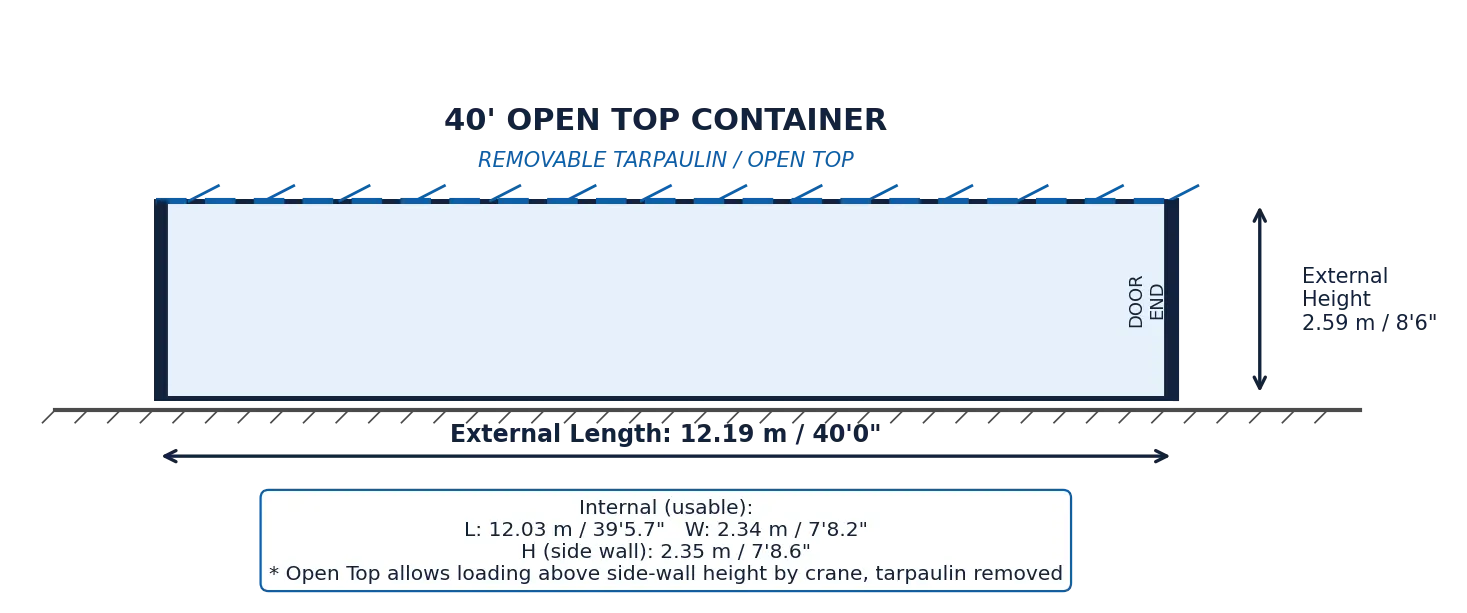
An Open Top container has the same external structure as a standard dry container — closed side walls and a door end — but instead of a fixed metal roof, it has a removable tarpaulin. This means cargo can be loaded from above by crane, and pieces that are taller than the container’s side-wall height can still be shipped, as long as the tarpaulin is removed during loading. Open Top is the right choice when the cargo’s height exceeds a standard container, but its length and width still fit within the container’s footprint.

Flat Rack (FR)
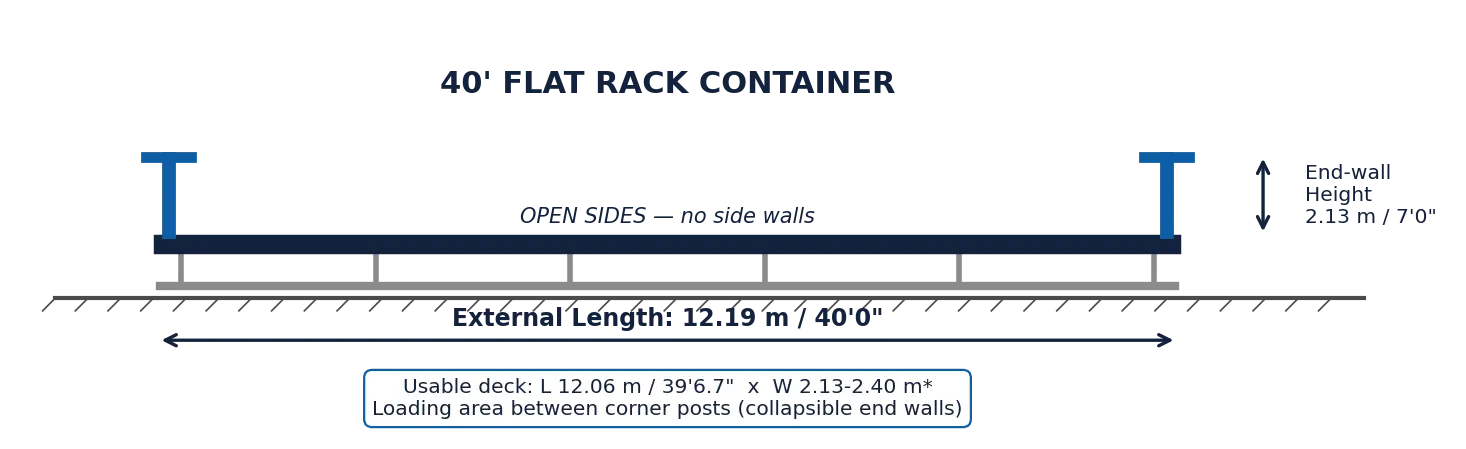
A Flat Rack has no side walls or roof at all — only a flat deck with collapsible end walls (corner posts) at each end. Cargo sits directly on the deck and is secured with lashing. Flat Rack is the right choice when the cargo’s width exceeds the container’s usable width (in which case the cargo overhangs the sides, which requires carrier approval for over-dimensional booking), or when the cargo’s shape does not fit inside an enclosed box at all (e.g., machinery with irregular protrusions).
Quick decision guide
Cargo Restriction Recommended Equipment Height only (fits within length/width of a standard container) Open Top (OT) Width exceeds container limits, or irregular shape Flat Rack (FR) Both height and width exceed limits Flat Rack (FR) — height is not restricted on an open deck Fits fully within standard dimensions Standard Dry / High Cube container What about static cargo on a RoRo vessel?
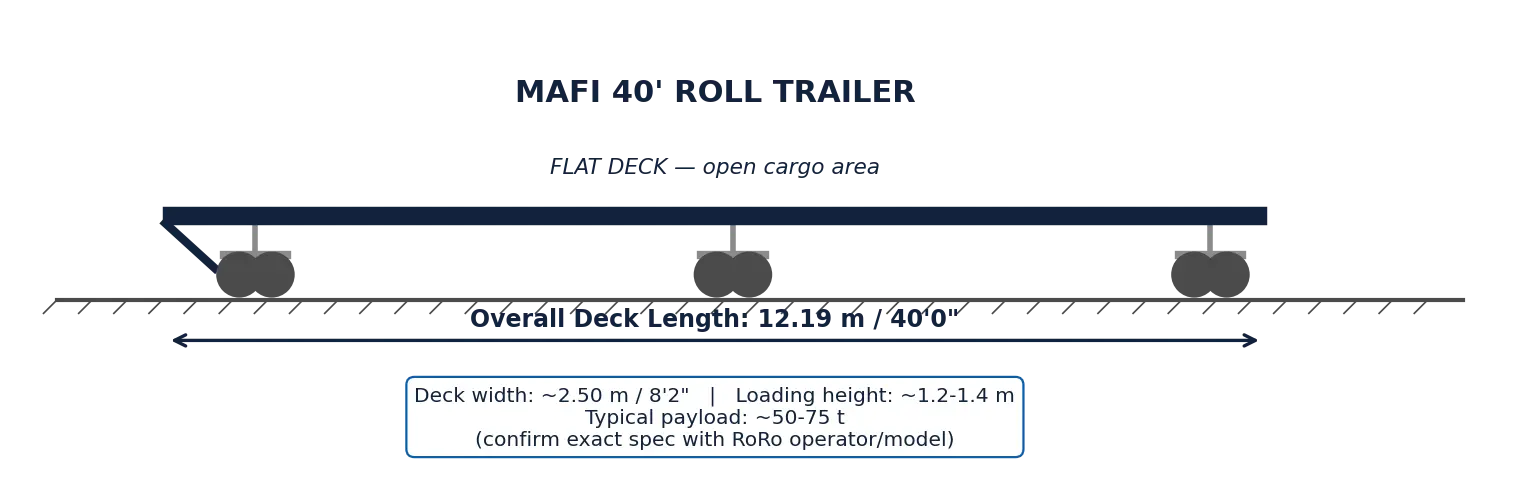
For cargo that cannot move under its own power — i.e., it cannot be “driven” onto the vessel — the best solution on a RoRo (Roll-on/Roll-off) service is a piece of equipment called a MAFI roll trailer. The cargo is loaded and secured on top of this flat, low-profile platform, which is then towed by a specialized terminal tractor directly into the vessel’s cargo deck through the stern or bow ramp.
As with containerized cargo, the dimensions of the piece determine which MAFI size is needed — the goal is to select a deck length that fits the cargo with minimal wasted space, while keeping the total weight within the trailer’s payload capacity.
MAFI Roll Trailer sizes
Size Deck Length Deck Width Typical Payload MAFI 20′ 6.10 m / 20’0″ ~2.50 m / 8’2″ ~20-30 t MAFI 40′ 12.19 m / 40’0″ ~2.50 m / 8’2″ ~50-75 t MAFI 50′ 15.24 m / 50’0″ ~2.50-3.00 m ~70-90 t MAFI 62′ 18.90 m / 62’0″ ~2.50-3.00 m ~90-120+ t (multi-axle) Note: MAFI trailers do not follow a single ISO standard like containers — deck dimensions, loading height, and payload capacity vary by model and by RoRo operator (e.g., MAFI SP, Kalmar, Kamag). Additional sizes exist upon request for extra heavy, multi-axle cargo — always confirm the exact specification with the RoRo operator for the specific route before booking.
What is RoRo (Roll-on/Roll-off) shipping?
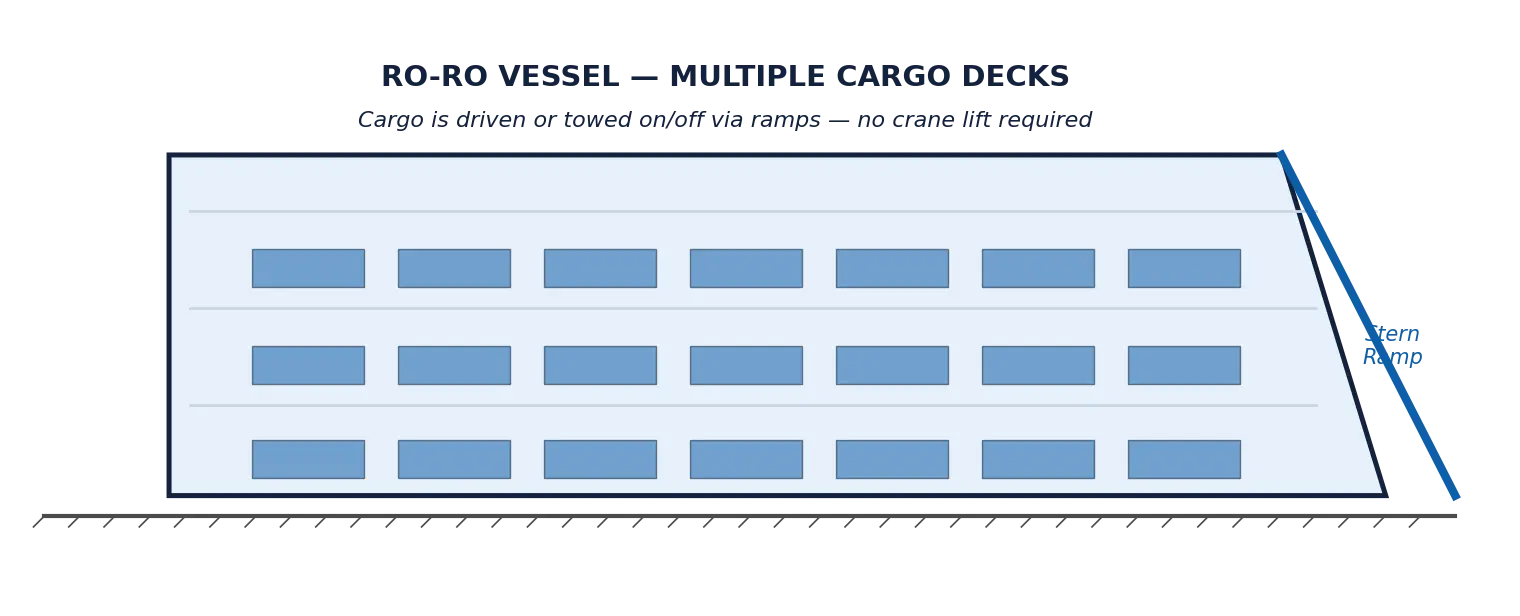
RoRo stands for Roll-on/Roll-off — a method of ocean shipping where cargo is loaded and discharged by rolling it on and off the vessel using its own wheels (or a wheeled platform such as a MAFI trailer), instead of being lifted by crane. RoRo vessels are built with internal ramps connecting multiple cargo decks, allowing vehicles, machinery, and wheeled cargo to be driven directly from the quay into the ship’s hold.
Why RoRo is used for project cargo
- No crane lift is required for cargo that can roll — this reduces handling risk for delicate or high-value machinery.
- Cargo secured on a MAFI trailer can be towed on/off even if it has no engine or wheels of its own, extending RoRo access to static cargo as well.
- Loading/discharge is generally faster than crane-based (Lift-on Lift-off) operations, since multiple units can be driven aboard in sequence.
What is “Towable” vs “Non-towable” cargo?
Towable Non-towable Cargo with a working engine that can be driven under its own power directly onto the vessel — it does not need to be towed. Examples: trucks, buses, self-propelled machinery. Cargo that has no engine, or cannot move under its own power, but has a structure/wheels suitable for being towed onto the vessel by an external tractor. This includes cargo secured on a MAFI trailer, which itself is towed into the ship by a specialized terminal tractor. In both cases, the cargo still uses the vessel’s RoRo ramps to load and discharge — the difference is simply whether it moves under its own power (towable, e.g. a running vehicle) or needs an external specialized tractor to pull it aboard (non-towable, e.g. static cargo on a MAFI trailer).